

If you have a cat or are thinking about getting one, one of the first things you might want to know is the cats age span and how long they live.
The lifespan of cats, also known as their age range, depends on factors such as their diet, lifestyle, breed, and medical care.
Most cats live between 13 and 17 years, but with good care, some can live longer than 20 years.
Knowing how long your cat will live helps you:
Take better care of their health.
Know what stages of life they are in.
Make their lives better overall.
What Is the average cat’s age span? (Indoor vs Outdoor Comparison)
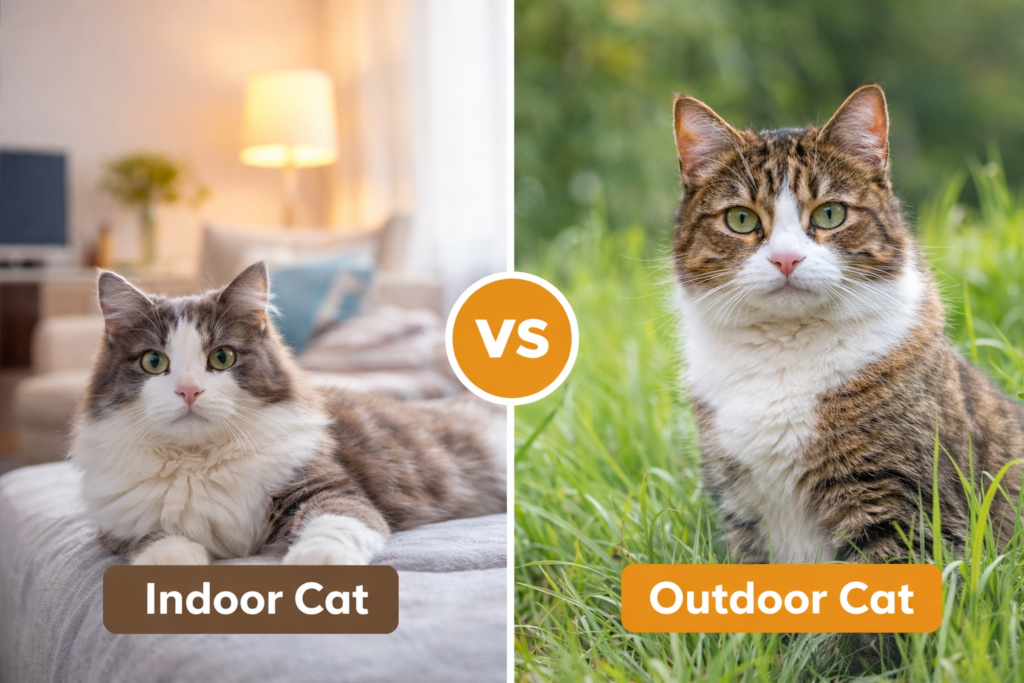
Not all cats have the same lifespan. One important thing to think about is whether the cat lives inside or outside.
Average Lifespan of Indoor Cats
- Usually they live 13–17 years.
- Can reach 20+ years with good care.
- A safer place with fewer dangers.
Average Lifespan of Outdoor Cats
- Usually live for two to five years.
- More likely to get sick or have an accident.
- Less regular care and food.
Indoor vs Outdoor Cats Age Span (Comparison Table)
Type of Cat | Average Lifespan | Risk Level | Care Control |
Indoor Cat | 13–17+ years | Low | High |
Outdoor Cat | 2–5 years | High | Low |
Indoor cats live longer because they are safe from harm.
Cat Life Stages Explained (Kitten to Senior)
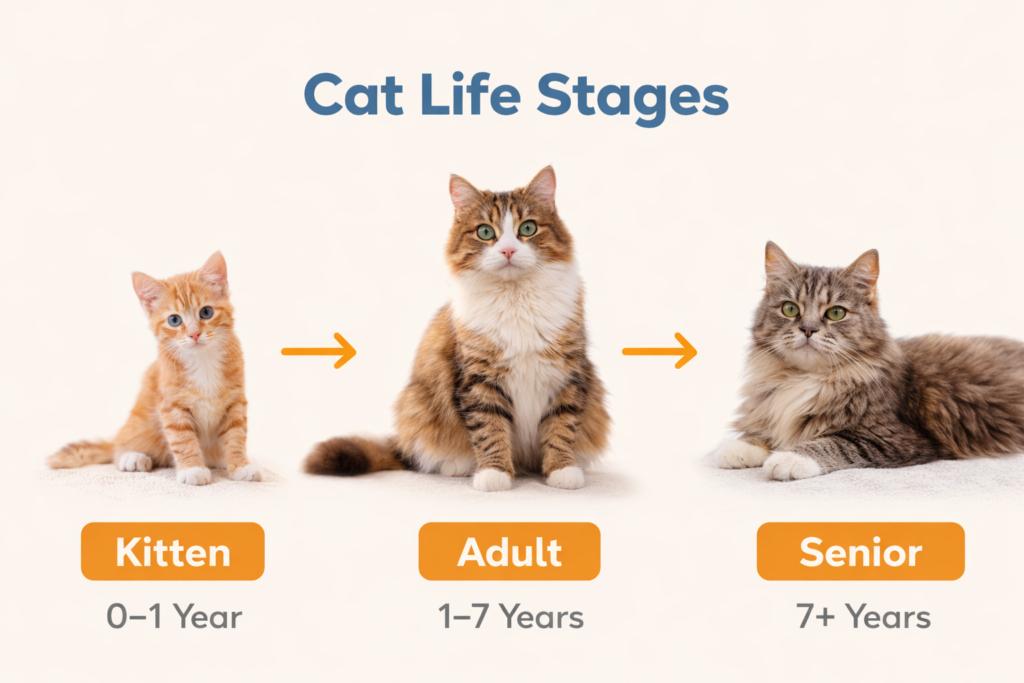
As cats get older, they go through different stages of life.
Kitten Stage (0–1 Year)
- This cat grows and develops quickly.
- It’ll need vaccinations and consistent training.
- You can expect it to be quite playful and energetic.
Adult Stage (1–7 Years)
- This is typically when people are most active and healthy.
- To keep feeling good, a balanced diet and regular exercise matter a lot.
- People’s behavior usually stays pretty stable.
Mature & Senior Stage (7+ Years)
- Metabolism naturally slows down.
- Health issues often become more frequent.
- That’s why regular vet checkups are so important.
Factors That Affect Cats’ Age Span
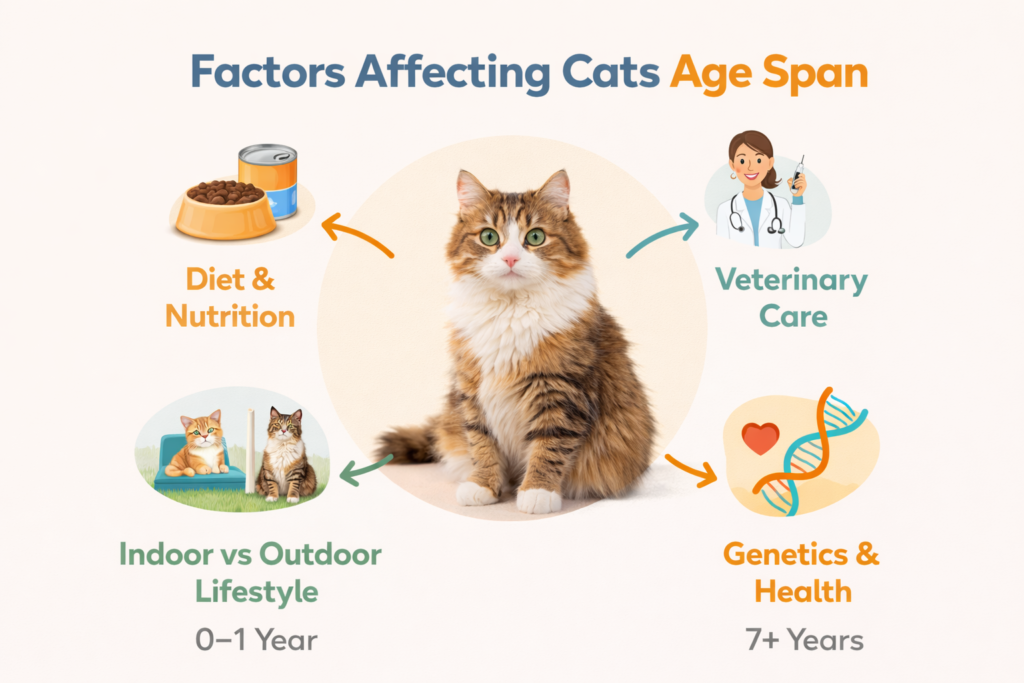
A cat’s lifespan depends on various factors.
Breed Differences
- Mixed-breed dogs often live longer than purebreds.
- Purebreds can be prone to various genetic issues.
Diet & Nutrition
- A healthy diet helps us live longer.
- Poor nutrition puts us at risk for many illnesses.
Indoor vs Outdoor Lifestyle
- Indoor cats lead safer lives.
- Outside, they encounter many more dangers.
Veterinary Care & Vaccinations
- Routine check-ups help catch potential health issues early.
- Vaccinations offer strong protection against infections.
Genetics & Health Conditions
- Some cats just have good genes for health.
- But ongoing illnesses often mean they don’t live as long.
Cat Breeds and Their Average Lifespan
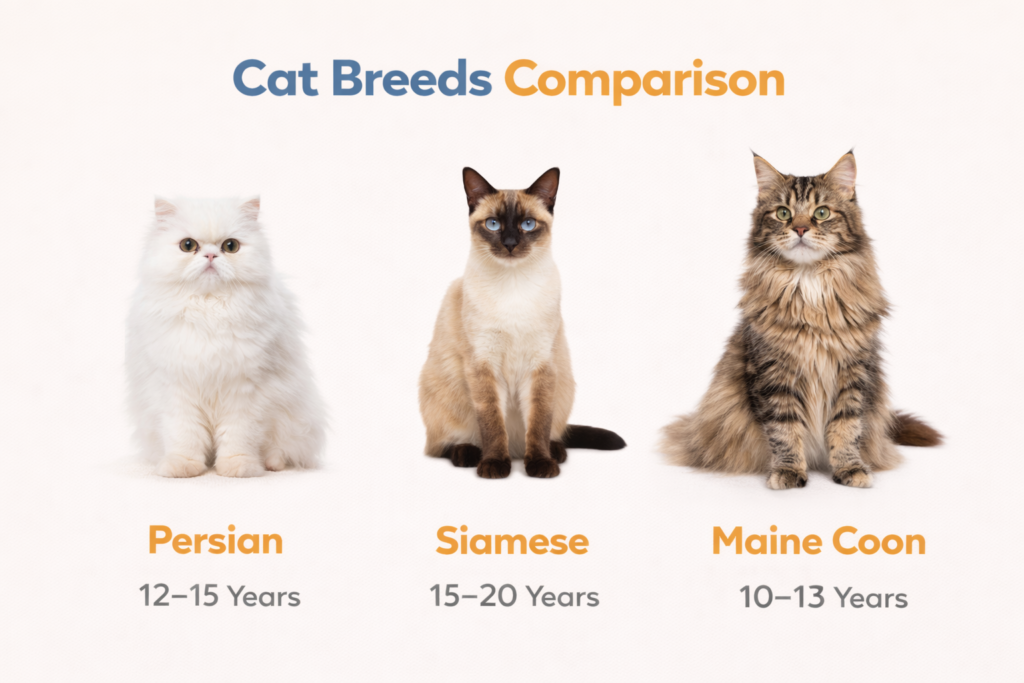
A cat’s lifespan varies quite a bit, often because of its breed.
Persian Cat Lifespan
- Around 12–15 years.
- Needs good grooming care.
Siamese Cat Lifespan
- Around 15–20 years.
- Known for a long life.
Maine Coon Lifespan
- Around 10–13 years.
- Larger cats may not live longer.
Indian (Desi) Cat Lifespan
- Around 15–20 years.
- Strong immunity and adaptability.
How to Increase Your Cat’s Lifespan (Practical Care Guide)
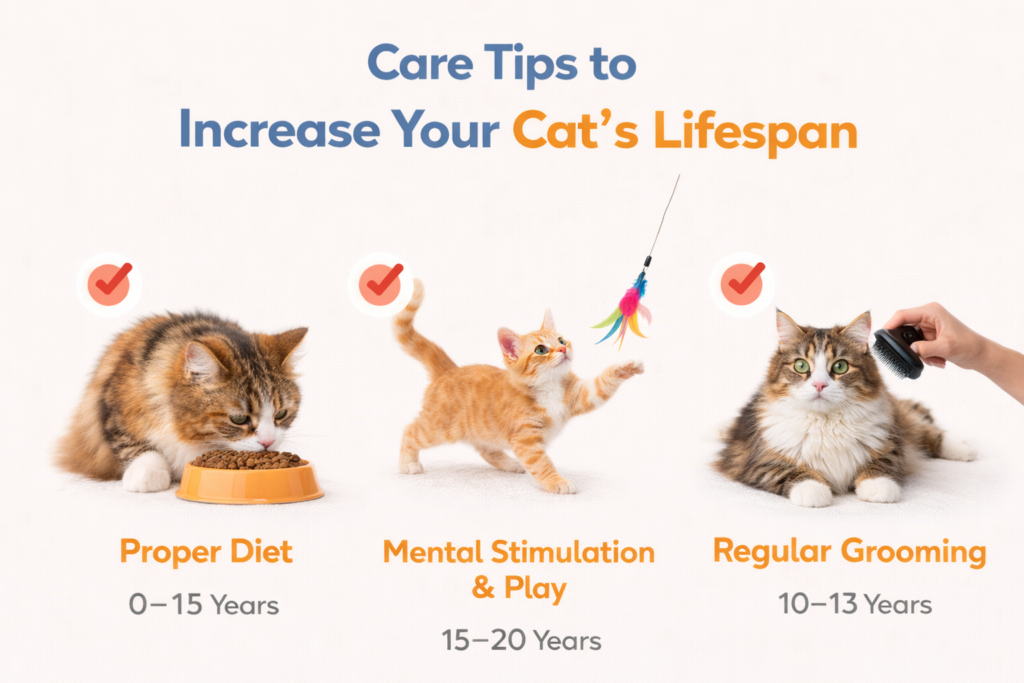
With this guide, you can help your cat by taking proper care and preventing diseases.
Proper Diet Plan
- Feed balanced, good-quality food
- One should not feed more than the requirement.
Regular Vet Checkups
- Helps check diseases early.
- Always keep vaccinations up to date.
Mental Stimulation & Play
- Play with your cat every day.
- Giving them love and affection reduces stress, and they would not get bored.
Grooming & Hygiene
- Daily brushing.
- Hygienic living environment.
Signs of Ageing in Cats (What to Watch For)
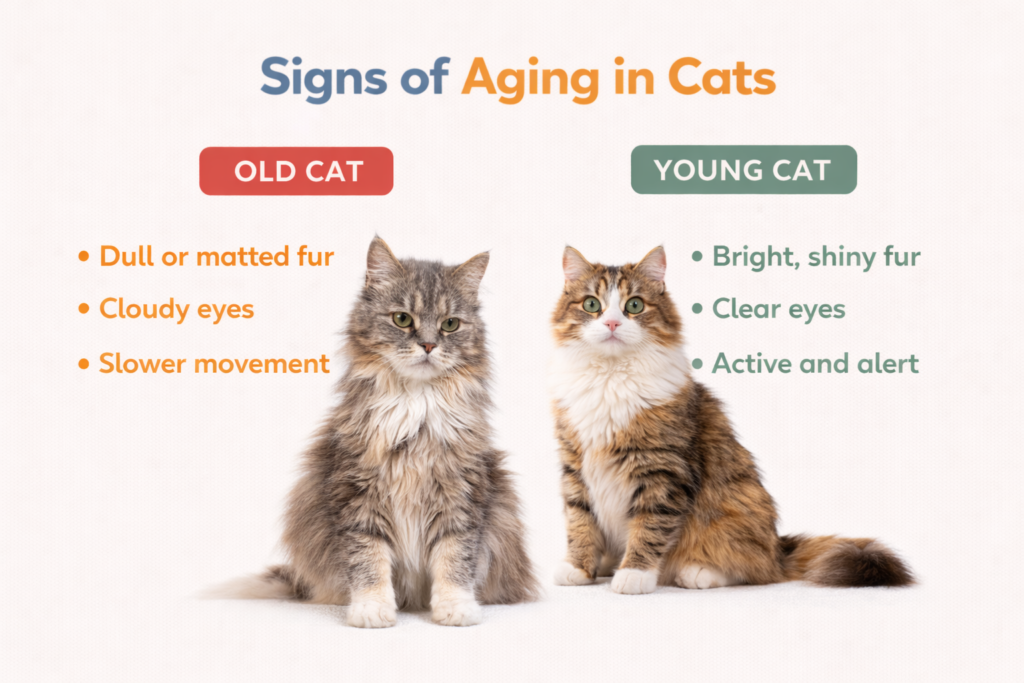
As a cat grows older, there are signs one should look for.
Physical Signs
- Weight changes.
- Dull coat.
- Reduced vision or hearing.
Behavioral Changes
- Always sleepy.
- Less activity.
- Moody.
Common Health Issues That Reduce Cats’ Age Span
Some health problems can create problems.
- Kidney disease
- Diabetes
- Dental issues
- Arthritis
Regular vet care helps prevent or manage these problems.
Indoor Cats vs Outdoor Cats: Which Live Longer?
Indoor cats usually live longer than Outdoor Cats because
- They are protected from accidents.
- They face fewer infections.
- Their diet and care are properly checked.
Outdoor cats may enjoy more freedom but face higher risks, which reduces their lifespan.
Cat Age to Human Years Chart
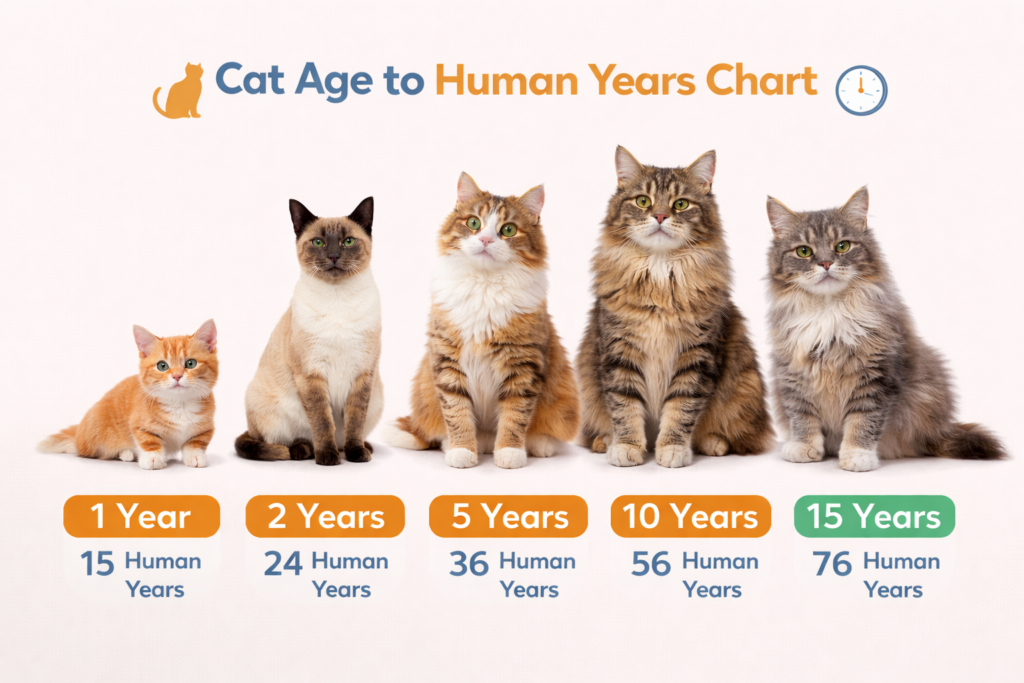
Cat Age | Human Age Equivalent |
1 year | 15 years |
2 years | 24 years |
5 years | 36 years |
10 years | 56 years |
15 years | 76 years |
Cats age quickly in their early years, but later, that process slows.
Conclusion: Helping Your Cat Live a Longer, Healthier Life
The length of a cat’s life truly hinges on the care it receives.
Provide them with good food, regular vet checkups, and a safe home, and they can enjoy a long, happy life, often living past 20 years.
FAQs About Cats Age Span
Q: How long do cats live on average?
A: It really depends on their lifestyle and how they’re cared for, but most cats live between 13 and 17 years.
Q: What is the maximum lifespan of a cat?
A: While it’s not common, some cats can live past 20 years.
Q: Do indoor cats live longer than outdoor cats?
A: Yes, indoor cats usually live much longer because they face far fewer risks.
Q: Which cat breed lives the longest?
A: You’ll often find Siamese and mixed-breed cats living longer than others.
Q: How can I increase my cat’s lifespan naturally?
A: To help your cat live a long, healthy life, focus on good nutrition, consistent vet visits, plenty of exercise, and a safe indoor environment.
Q: At what age is a cat considered old?
A: Most cats are considered senior once they reach 7-10 years old.
Q: What are the signs of an aging cat?
A: You might notice a few things: changes in weight, less activity, and shifts in their usual behavior are all common signs of aging.